
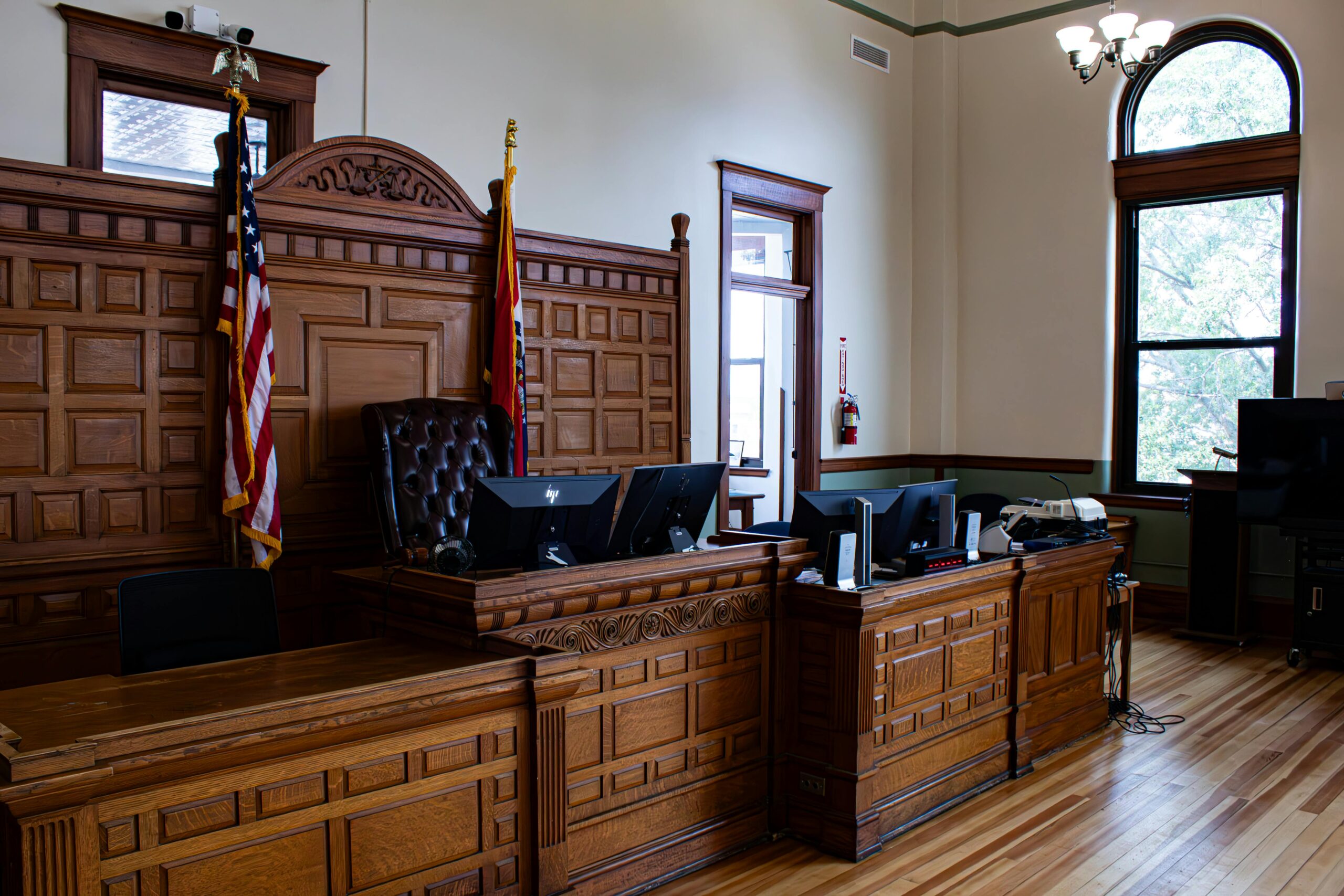
Can a Judge Dismiss a Criminal Case Before Trial in Iowa?
Yes, but only in limited circumstances.
In most criminal cases, a judge cannot dismiss a charge simply because the judge believes the State’s evidence is weak or doubts that the prosecution will ultimately obtain a conviction. Questions about what actually happened, whether witnesses are credible, and which version of events should be believed are ordinarily questions for a jury.
There are circumstances, however, in which a criminal charge can be dismissed before trial because the State’s allegations are legally insufficient.
What Is a Motion to Dismiss?
Iowa Rule of Criminal Procedure 2.11(8)(a) permits a defendant to file a motion to dismiss when the matters alleged by the State do not constitute the offense charged, when prosecution is barred by the statute of limitations, or when another legal ground prevents the prosecution.
This is different from asking the judge to decide whether the defendant is guilty or innocent.
When considering whether the State has sufficiently alleged an offense, the court generally views the allegations contained in the trial information and minutes of testimony in the light most favorable to the State. The court assumes the witnesses will testify consistently with the minutes rather than deciding whether those witnesses should be believed.
The State does not have to prove the defendant guilty beyond a reasonable doubt at this stage. The question is whether the allegations, if taken as true, provide a legally sufficient basis for the charge.
Most Questions of Fact Are for the Jury
A motion to dismiss generally cannot be used as a substitute for a trial.
If the State alleges facts that would establish the elements of the offense and there is a genuine dispute about whether those facts are true, that dispute ordinarily must be resolved by a jury.
For example, a judge generally cannot dismiss a case before trial simply because the defendant disputes a witness’s account or believes the witness is lying. Determining credibility and deciding disputed questions of fact are traditional functions of the jury.
A motion to dismiss becomes more significant when the problem is not whether the State’s allegations are believable, but whether those allegations are legally sufficient even if they are accepted as true.
What If the State Is Missing an Element of the Crime?
Every criminal offense contains elements that the State must prove.
If the trial information and minutes of testimony do not contain evidence supporting a required element, the defense may be able to challenge the charge before trial. The court does not need to wait for a jury to decide a factual question when the State has not alleged facts that would establish the crime in the first place.
The State may sometimes be allowed to amend its allegations or minutes to correct the problem. But if the deficiency is not cured, dismissal may be appropriate.
Court Dismisses Child Endangerment Charge Before Trial
Lucas Taylor represented a defendant in a Madison County child endangerment case and moved to dismiss the charge on the ground that the State’s own allegations did not establish a required element of the offense.
The alleged victim was fifteen years old, which meant the State was required to establish that the minor had a mental or physical disability. Taylor argued that the facts contained in the minutes of testimony were legally insufficient to establish that element.
The court agreed. Even viewing the allegations in the light most favorable to the State, the court found insufficient evidence that the minor had the mental disability required by the statute. The court granted Taylor’s motion and dismissed the criminal charge.
A Motion to Dismiss Is Different From a Motion to Suppress
A motion to dismiss challenges whether the prosecution itself can legally proceed on the charge.
A motion to suppress generally asks the court to exclude particular evidence because it was obtained unlawfully, such as evidence obtained through an unconstitutional search, an unlawful traffic stop, or improper police questioning.
Both can substantially affect a criminal case, but they address different legal problems.
Challenging a Criminal Charge Before Trial
Pretrial motions can sometimes resolve important legal issues before a case reaches a jury. But dismissal of a criminal charge before trial is unusual because judges generally cannot decide disputed questions of guilt or credibility that belong to the jury.
Lucas Taylor has successfully challenged criminal charges through pretrial motions, including motions to dismiss where the State’s allegations were legally insufficient to establish the charged offense.
Read the Court’s Ruling
Download the Court’s Ruling